


The Fascinating History of Chocolate: Origins, Evolution and Curiosities
At Pasticceria Milano in Gavirate, chocolate is not simply an ingredient: it is a philosophy, a tradition, and a passion passed down with care through generations of artisanal craftsmanship. To fully understand the value of what we create every day in our workshop, it is Worth retracing the extraordinary journey of cocoa: from the tropical forests of the ancient Mesoamerican civilizations to the European courts, and finally — through centuries of evolution — to our pastry shop in the heart of the Varese area.
It is a story of remarkable transformations, in which cocoa has evolved from a sacred drink reserved for kings and shamans, to a symbol of aristocratic luxury, and finally into an artisanal art form that we proudly celebrate today through our creations.
The Gold of the Maya and Aztecs: The Origins of Cocoa
The history of chocolate has its roots in the warm and humid tropical forests of Central and South America, the perfect environment for the growth of the Theobroma cacao tree. This scientific name, assigned in the 18th century by botanist Carl Linnaeus, comes from Greek and literally means “food of the gods”, a testament to the almost divine value that cocoa has always held.
The first people to discover, cultivate, and consume cocoa were the Olmecs around 1500 BC.
Later, the Maya and Aztecs elevated its use to a central element of their cultures. For the Maya, cocoa was a sacred gift. From these precious beans they created a thick and frothy drink called xocoatl (the origin of the word “chocolate”), prepared cold by mixing cocoa paste with water, corn flour, chili pepper, vanilla, and other local spices.
Far from being sweet, this drink was bitter, energizing, and invigorating. It was consumed almost exclusively by nobles, warriors, and during important religious ceremonies.
Among the Aztecs, cocoa was so valuable that the beans were used as a real currency for trade and the payment of tributes. According to their mythology, the god Quetzalcóatl (the Feathered Serpent) gave the cocoa tree to mankind, a gift that led to his exile because he had shared a divine treasure with humans.
The Arrival in Europe and the Italian Chocolate Tradition
The destiny of cocoa changed forever in the 16th century with the colonization of the Americas. Although Christopher Columbus was the first European to encounter cocoa beans, it was the conquistador Hernán Cortés who understood their economic potential and brought them to the Spanish court in 1528.
At first, the bitter drink did not appeal to European tastes. The real turning point came when Spanish monks adapted the original recipe, removing chili pepper and adding sugar, cinnamon, and vanilla. The result was a sweet and irresistible beverage. At first, the bitter drink did not appeal to European tastes. The real turning point came when Spanish monks adapted the original recipe, removing chili pepper and adding sugar, cinnamon, and vanilla. The result was a sweet and irresistible beverage.
From Spain, the secret quickly spread throughout Europe. In Italy, chocolate arrived thanks to Venetian merchants and the connections between European royal courts. Soon, Florence, Venice, Turin, and Sicily became important centers of a true “chocolate craze”, transforming the drink into an unmistakable symbol of Baroque aristocratic luxury.
Turin and the Art of Gianduiotto
Turin undoubtedly holds the title of historic capital of Italian chocolate making. In 1560, to celebrate the transfer of the capital of the Duchy of Savoy from Chambéry to Turin, Emmanuel Philibert offered citizens a steaming cup of hot chocolate. From that moment, the bond between Turin and chocolate became inseparable.
In 1678, the city granted the first official license for public chocolate production.
However, the innovation that revolutionized the market came in the 19th century during Napoleon’s Continental Blockade, which made imported cocoa extremely rare and
expensive.
To overcome the shortage of raw materials, Turin’s master chocolatiers decided to replace part of the cocoa with finely ground hazelnuts from the Langhe region. This gave birth to the delicious Gianduja mixture and, in 1865, to the famous Gianduiotto: the first chocolate in the world to be individually wrapped.
Modica and the Ancient Cold Processing Method
Moving south, Sicily preserves a unique treasure: Modica Chocolate PGI. Introduced by the Spanish during their rule of the island, the Modica recipe is directly inspired by the ancient chocolate-making techniques learned from the Aztecs.
Its most distinctive feature is the cold processing method (which never exceeds 40°C) and the absence of the conching phase, the long high-temperature mixing process typical of modern chocolate production. This technique means that sugar crystals do not completely dissolve, remaining intact inside the cocoa mass. The result is a chocolate bar with a characteristic grainy and crumbly texture, where the pure aromas of cocoa emerge in all their intensity.
From the Industrial Revolution to Modern Chocolate Bars
Until the beginning of the 19th century, chocolate remained exclusively a liquid beverage.
The Industrial Revolution changed everything. In 1828, Dutch inventor Coenraad van Houten created a hydraulic press capable of separating cocoa butter from cocoa powder, allowing the production of solid chocolate as we know it today.
A few decades later, in 1879, Swiss chocolatier Rodolphe Lindt invented the conching machine, a prolonged refining process that made chocolate smooth, velvety, and melting in the mouth, reducing acidity and improving its texture.
These technological innovations lowered production costs and allowed large-scale manufacturing, transforming chocolate from an elite indulgence into a pleasure accessible to everyone.
Chocolate Between Wellbeing and Curiosities
Besides being a pleasure for the palate, high-percentage dark chocolate is also considered a valuable ally for wellbeing.
Cocoa is naturally rich in antioxidants (flavonoids), which contribute to cardiovascular health, and it is a source of minerals such as magnesium and iron.
Chocolate also stimulates the production of serotonin and endorphins, neurotransmitters associated with relaxation and a positive mood, confirming what ancient civilizations had already discovered: chocolate has always been a source of pleasure and comfort.
The Chocolate Culture in the Varese Area
The city of Varese and its province also have a strong and respected tradition linked to pastry making and artisanal chocolate craftsmanship.
Thanks to its strategic location, close to the Swiss and Piedmontese borders, the Varese area has absorbed and reinterpreted over time the finest influences of cocoa processing.
Between historic pastry workshops and modern artisan excellences, chocolate has become a key element of the local gastronomic culture, ranging from classic pralines to handmade spreads and innovative concepts such as bean-to-bar production (from cocoa bean to chocolate bar).
This attention to high-quality ingredients has created an increasingly passionate and knowledgeable audience, turning tastings and chocolate-themed events into genuine cultural experiences for the area.
Pasticceria Milano’s Chocolate “Brutti e Buoni”
At Pasticceria Milano in Gavirate, we proudly continue this extraordinary centuries-old tradition with dedication and passion.
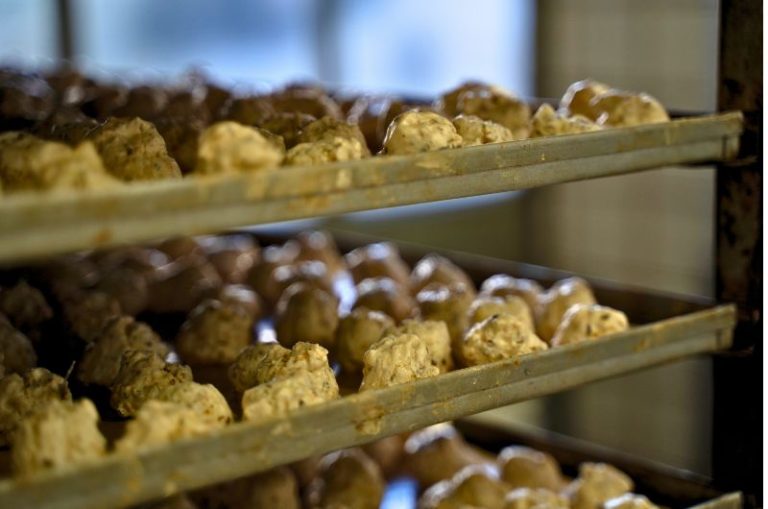
Among our most loved specialties are our Chocolate Brutti e Buoni: a traditional Italian pastry with a rustic and irregular shape, crisp on the outside and soft inside, enriched with an intense heart of high-quality dark chocolate.
Made according to the traditional recipe with toasted Langhe hazelnuts and fine cocoa, every bite reveals authentic aromas and a genuine flavour that tells the story of the care and craftsmanship of our laboratory.
Each piece is handmade by our pastry chefs to enhance the natural aromatic notes of cocoa.